 Attention: You are switching to the expert selection*
  Select vehicle








Lowering springs in the DTS Shop
Large selection of sports springs and coilover springs from well-known brands
Lowering for more driving pleasure
Do you want to give your car a new look and improve its performance at the same time? Then lowering springs are just the thing for you! With our sports or coilover springs, you can lower your vehicle and noticeably improve its handling and driving pleasure.
When selecting our suspension springs, we place the highest value on quality and safety. That's why we only offer springs from renowned manufacturers that have undergone rigorous testing. So you can be sure that our coil springs work perfectly and offer you a safe driving experience. Take a look around our shop and find the perfect coil springs for your car!
What are coil springs and what do they do?
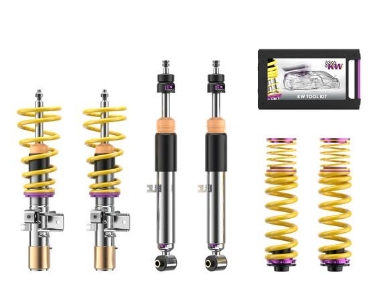
Coil springs are one of the most popular tuning products when it comes to lowering vehicles. They are made of high-quality spring steel and are individually developed for the respective vehicle. Lowering with coil springs lowers the car's centre of gravity, resulting in improved handling and firmer suspension.
Thanks to the height adjustment on the front and rear axle, you can adjust the vehicle height (within the tested adjustment range) to suit your individual taste. This means you can decide for yourself how low you want your car to be.
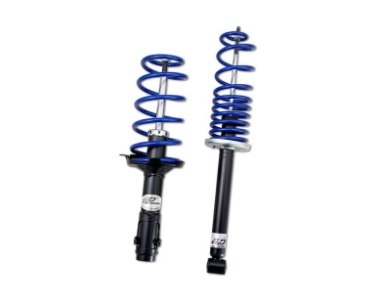
What are sports springs and what do they do?
Sports springs are special springs that ensure that the vehicle is lowered. This makes it look sportier and more dynamic. But it is not only the appearance that is changed, the lowering also improves the driving behaviour. Due to the car's lower centre of gravity, it is more stable on the road and has better road grip.
In addition, sports springs also provide firmer suspension, which leads to a more direct and dynamic driving experience. The lowering springs are usually installed in combination with the car's standard dampers.
Sports springs vs. coilover springs - what are the differences?
 Please scroll sideways
Topic

sporty look
improved performance
Adjustable lowering VA
Lowering HA adjustable
Hardness adjustable (optional)


Are you ready?
Choose your car now and discover the full range of products!
Frequently asked questions
1. What does the installation of lowering springs cost?
The cost of installing lowering springs can vary greatly, depending on the workshop and the specific vehicle model. In general, however, you should expect to pay between 100 and 300 euros. It should be noted that the costs for adjusting the track can be added to these costs. An exact cost breakdown should always be discussed with the workshop carrying out the work.
2. Do I have to have the lowering springs registered with the TÜV?
Yes, a change to the suspension springs is a significant change to the vehicle and must therefore be registered with the TÜV. The TÜV checks whether the installed lowering springs are approved (ABE) and whether they have been installed correctly. This registration is important, as otherwise your vehicle is no longer roadworthy and you could have problems with the insurance company in the event of damage.
3. What are the advantages of lowering with sports or coilover springs?
Lowering with sports springs significantly improves the handling and roadholding of your car. The lower centre of gravity increases cornering stability and reduces lateral inclination, which leads to a generally sportier driving style.
The biggest advantage of coilover springs is the ability to customise the height of the vehicle. This means you can not only influence the look of your car, but also improve its handling.
The installation of lowering springs in combination with the original suspension is not only easier and cheaper than a sports or coilover suspension. In modern vehicles, the electronic damping of the original suspension is also retained.
5. Which brands are available?
As an online retailer, we have specialised in lowering in the field of vehicle tuning for decades. We not only offer convincing products, but also comprehensive and competent advice for your concerns and wishes.
Our selection includes renowned manufacturers such as KW Suspensions, ST Suspensions and ap Sport suspensions. Our experts are on hand with help and advice to help you choose the right sports springs.
Our brands
To provide you with the best possible product selection, we offer high-quality products from the following brands in our range:
 Coilovers from DTSline
 Coilovers from ST suspensions
 Coilovers from KW suspensions
 Coilovers from ap sport suspensions
 Coilovers from LSD
The advantages and disadvantages of lowered vehicles
Lowering a vehicle not only changes the external appearance of a vehicle, but can also have a number of effects on driving behaviour. However, deciding whether a vehicle should be lowered or not requires careful consideration of the advantages and disadvantages associated with this change.
Advantages of a lowered car
Lowering the car offers several potential benefits, ranging from visual improvements to improved handling.
Sportier look
A lowered car often looks more dynamic and aggressive. The reduced height gives the vehicle a sportier and more eye-catching appearance, which appeals to many car enthusiasts.
Better handling
By reducing the centre of gravity, the car is more stable when cornering. The reduced tipping moment enables more precise steering behaviour and improves road holding.
Improved aerodynamics
A lower vehicle profile improves aerodynamics. This can contribute to increased efficiency and even slightly improved fuel efficiency. For electric vehicles, this can lead to increased range. This can contribute to increased efficiency and even slightly improved fuel efficiency.
Increased stability
Due to the lower centre of gravity and reduced lateral inclination, a lowered car is more stable on straight roads and especially at higher speeds.
Disadvantages of lowering
Whilst a lowered car can offer many advantages, there are also potential disadvantages and challenges that should be considered:
Restriction of ground clearance
Lowering the car means it has less ground clearance, which can lead to problems on uneven roads, bumps or obstacles
Reduced suspension comfort
Lowering the vehicle too much can lead to reduced suspension comfort, which can impair driving comfort.
Difficulties when parking
Some driveways, kerbs or car parks may be more difficult to access due to the lower ground clearance.